Understanding Containerized Wastewater Treatment
As the global need for efficient and sustainable wastewater management solutions intensifies, the significance of containerized wastewater treatment systems has never been more pronounced. These systems offer a modern approach to treating water, particularly in areas where traditional treatment facilities are impractical or impossible to implement. By encapsulating advanced treatment technologies within portable containers, these systems provide a level of flexibility and efficiency that meets the diverse demands of various sectors. From municipal infrastructures to industrial applications, the advantages of containerized solutions are substantial and multifaceted.
What is Containerized Wastewater Treatment?
Containerized wastewater treatment refers to the use of portable, modular systems housed within standard shipping containers that are specifically designed to treat wastewater efficiently. These systems are tailor-made to cater to different types of wastewater, including domestic sewage and industrial effluents, and are equipped with the necessary technology to address various contaminants.
The design and engineering of containerized systems allow for rapid deployment, making them particularly attractive for projects that require swift solutions. This portability enables organizations to relocate or install the systems with minimal downtime, which is vital in many emergency scenarios or for remote operations.
Key Components of Containerized Systems
A typical containerized wastewater treatment system integrates several key components to ensure effective treatment:
- Inlet Works: This includes screening and grit removal to protect downstream equipment.
- Biological Treatment: Often using activated sludge or membrane bioreactors, this stage effectively breaks down organic materials.
- Clarification: Solid-liquid separation is achieved through settling tanks or clarifiers.
- Disinfection: To eliminate pathogens, processes such as UV irradiation or chlorination are employed.
- Control Systems: Automation controls allow for real-time monitoring and optimization of the treatment process.
How They Address Common Wastewater Challenges
Containerized systems respond adeptly to several challenges frequently faced in wastewater treatment:
- Space Constraints: Ideal for locations with limited space, these systems can be set up in small areas, on rooftops, or in remote settings.
- Speed of Deployment: Quick installation allows municipalities and industries to address urgent treatment needs without long lead times.
- Operational Flexibility: Easily scalable, these systems can be expanded to meet changing demands, making them perfect for dynamic environments.
- Cost-Effectiveness: Reduced civil works and infrastructure requirements lead to lower overall costs.
Benefits of Containerized Wastewater Solutions
Flexibility and Rapid Deployment in Various Settings
The versatility of containerized wastewater treatment systems cannot be overstated. These systems are designed to adapt swiftly to geographical and operational changes. Their mobility means they can be transported to different sites as needed, making them particularly useful during natural disasters or in temporary installations for events or construction sites.
Operational Efficiency Compared to Traditional Plants
Containerized solutions often outperform traditional treatment plants in several key areas:
- Reduced Footprint: By consolidating treatment technologies within a single container, the overall space requirement is considerably lower.
- Less Energy Consumption: Optimized systems can operate on less energy, contributing to lower operational costs and a reduced carbon footprint.
- Maintenance Ease: Modular components allow for straightforward upkeep, which can often be performed without requiring extensive site downtime.
Lower Environmental Impact and Compliance
As environmental regulations become increasingly stringent, containerized wastewater treatment systems provide an effective means to ensure compliance with local and international standards. Their design supports efficient processing, which leads to cleaner effluents that minimize environmental impacts on surrounding ecosystems.
Deployment Considerations for Containerized Wastewater Systems
Site Preparation and Logistics Planning
Effective deployment of containerized systems begins with thorough site preparation. Factors such as access routes for transportation, utilities for power and water supply, and site conditions must be assessed early in the planning process. This pre-planning is essential to avoid delays during installation and operation.
Installation Process: From Delivery to Operation
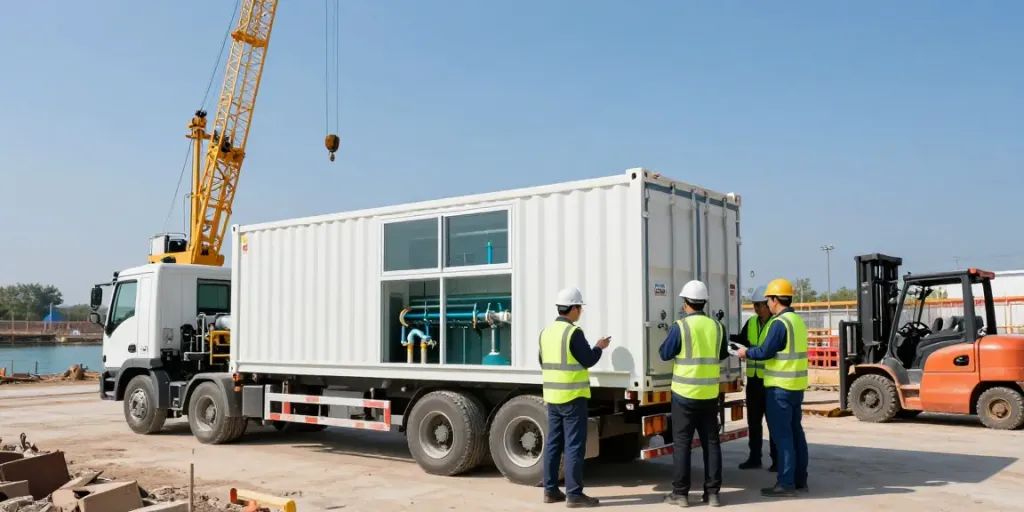
The installation process for containerized wastewater treatment systems is designed to be straightforward. Typically, the delivery involves the use of a flatbed truck and a crane. Once onsite, the setup can be completed within one to two days, allowing for rapid transition to operational status. The pre-engineered nature of these systems enhances this efficiency, as most components are factory-tested before shipment.
Maintenance Needs and Best Practices
Routine maintenance is crucial to ensuring the longevity and effectiveness of containerized systems. Some best practices include:
- Regular inspections of mechanical and electrical components.
- Monitoring of effluent quality to ensure compliance with discharge requirements.
- Scheduled cleaning of aeration systems and clarifiers to prevent biofouling.
Case Studies: Successful Applications of Containerized Systems
Industrial Sector: Managing Complex Effluents
Containerized systems have been effectively utilized in various industrial settings to tackle complex effluent challenges. For example, a manufacturing facility dealing with a high concentration of heavy metals successfully implemented a containerized system that integrated advanced filtration and chemical treatment processes, leading to significant reductions in pollutants.
Domestic Applications in Remote Locations
In rural areas lacking infrastructure, containerized wastewater treatment systems have been deployed to provide essential sanitation services. These systems can be transported to remote locations and set up quickly, ensuring communities have access to treated water while minimizing environmental impact.
Emergency and Disaster Relief Scenarios
During natural disasters, the immediate availability of clean water is critical. Containerized treatment systems can be rapidly deployed to affected areas to manage sewage treatment effectively, preventing the spread of waterborne diseases and enabling a quicker recovery for communities.
Future Trends: Innovations in Wastewater Treatment Technology
The Role of Automation and Smart Technologies
The integration of smart technology into containerized wastewater treatment systems is revolutionizing the industry. Automated monitoring systems using IoT technologies enable real-time data collection and analysis, optimizing operational efficiency and reducing human error.
Emerging Practices in Environmental Sustainability
Sustainability is at the forefront of modern wastewater management practices. Innovations such as the use of renewable energy sources to power treatment systems and the recovery of valuable resources (e.g., biogas and nutrients) from wastewater are becoming more prevalent. Containerized systems are uniquely positioned to incorporate these practices, ensuring minimal environmental impact.
Predictions for Containerized Systems in 2026 and Beyond
As the demand for effective wastewater treatment solutions continues to rise, it is anticipated that containerized systems will evolve significantly. Developments in material science and treatment technologies are expected to increase their efficiency and broaden their applicability across various sectors. Enhanced automation and sustainability measures will also drive the adoption of these systems as industries strive to meet stricter environmental legislation.
What are the advantages of containerized wastewater treatment?
Containerized wastewater treatment systems offer numerous advantages, including rapid deployment, operational flexibility, lower environmental impact, and compliance with regulations. Their modular design allows for easy transportation and installation, making them ideal for fluctuating needs.
How is a containerized system different from conventional treatment?
Unlike conventional treatment facilities, which typically require extensive infrastructure and lengthy installation times, containerized systems are pre-engineered and can be set up quickly. This modular approach also allows for customization based on specific treatment needs.
What are common applications for these systems?
Common applications for containerized wastewater treatment systems include industrial effluent management, sewage treatment in rural areas, emergency response setups in disaster situations, and temporary installations for large events.
How do containerized solutions aid in environmental compliance?
Containerized systems are designed to meet or exceed environmental regulations for effluent quality. Their advanced treatment technologies ensure that pollutants are adequately removed before discharge, aiding organizations in maintaining compliance with local and international standards.
What future developments should we expect in this technology?
Future developments in containerized wastewater treatment technology will likely focus on enhancing automation, integrating renewable energy sources, and improving effluent quality through advanced treatment methods. As the industry continues to evolve, these systems will become even more effective in addressing global water treatment challenges.